Adam Kay’s supportive relationship with Simon
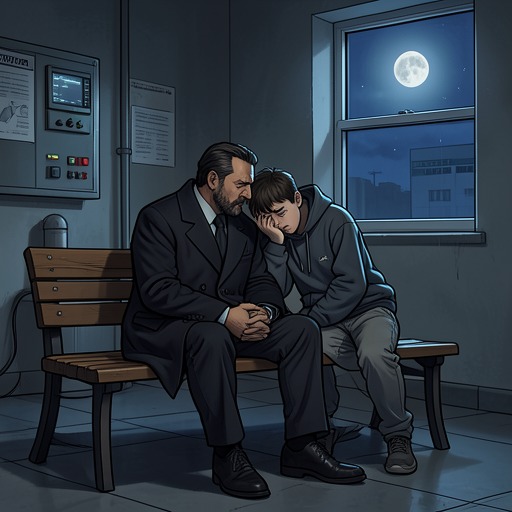
This Is Going to HurtAdam Kay’s supportive relationship with Simon grows from a brief, urgent response into a sustained personal commitment that neither man initially seems to have planned. Kay is a doctor, but not a mental-health specialist; Simon is a school friend’s younger brother whom Kay does not know well. Their connection is tested by recurring crises, Kay’s anxiety that he cannot do enough, and long stretches without contact. It shows how care can matter even when it cannot provide a cure, while making visible the strain of taking responsibility for another person without the training or safeguards of a formal clinical relationship.
The first call
In April 2006, during a quiet night shift, Kay is looking through Facebook when he sees Simon’s post bidding farewell to everyone. It is two in the morning on a Monday, and Kay thinks he may be the only person seeing the message at that hour. Although the two are not close, Kay sends Simon a private message asking whether he is all right. He says that he is awake, identifies himself as a doctor, and gives Simon his mobile number.
Simon calls, drunk and crying, after splitting up with his girlfriend. Kay recognizes that he has little relevant preparation: his experience in this area, he writes, is no greater than his experience laying bathroom tiles. Yet Simon appears to trust him, and Kay accepts that trust as enough to begin the conversation. The episode does not present Kay as an expert who can diagnose or resolve Simon’s distress. His immediate contribution is availability: he answers, listens, and stays on the phone.
After about two hours, Simon agrees to take a taxi to his mother’s house and see his GP in the morning. When the call ends, Kay feels the surge of relief and purpose he associates with a medical emergency. He is tired but positive, and considers that he may have made a greater difference to Simon that night than to any of his patients. The comparison links an informal conversation outside the ward to the emotional rewards of urgent medical work, even though the two kinds of care are not interchangeable.
An ongoing, informal helpline
By October 2006, Kay has spent six months acting as Simon’s mental-health helpline. He has told Simon he can call whenever he becomes worried, and Simon does call. Kay also repeatedly encourages him to keep seeing his GP, but Simon does not seem to follow that advice. Their arrangement therefore has two strands: Kay offers a dependable personal point of contact, while trying to direct Simon toward professional support that he believes could serve him better.
The arrangement makes Kay anxious as well as useful. He does not know when the phone may ring with bad news, a feeling he compares to being at work. He worries that a missed call could mean he has called back too late, and wonders whether Simon’s death would be his fault. Kay also knows that he lacks specialist preparation, even searching online for advice about what to say to someone who wants to die. He is glad that Simon is still alive, but that relief is accompanied by vigilance and a growing sense of personal responsibility.
Their conversations often return to the same ground. On one evening, Kay listens and tells Simon that the way he feels will pass. He recognizes that the conversation has become familiar, but considers that repetition may not make it pointless: Simon wants to know that somebody cares. Kay understands that reassurance and continued attention may themselves be part of his role as a doctor, even when he cannot offer a definitive solution.
Recurrence and the limits of rescue
In October 2007, after a very long day on the labour ward, Kay retrieves his phone from a locker and finds seven missed calls from Simon, along with several voicemails. He hesitates before listening because he fears that it may already be too late. The alarm proves to be a false one: Simon has simply sat on his phone. Kay’s relief comes out as exasperated humour, a tonal release after the moment in which he imagines a catastrophe. The incident also shows how ordinary gaps in communication have acquired heightened stakes for him.
In February 2009, Simon tells Kay that the previous night, after a fight with his new girlfriend, he had hurt himself and ended up in hospital; he is back home and says he is feeling all right. Simon asks whether Kay is angry with him. Kay says he is not, but admits to feeling angry that Simon had not called before the crisis, because Kay had wanted the chance to calm him down. He then feels guilty both about not having prevented what happened and about being angry. Care has become entangled with frustration and self-reproach: Kay’s wish to help can make Simon’s failure to contact him feel like a personal rejection or a missed opportunity to intervene.
They talk for about an hour. Kay again tells Simon that he can call at any time, day or night, and notes that they have had versions of this conversation many times over the years. He is saddened that Simon’s situation seems no better than when the first Facebook message appeared. But he revises that judgment: Simon’s feelings are not a problem that can be fixed like a broken leg. Simon is learning to manage them, and Kay thinks he should take some comfort from the length of time without a worse episode. This change in perspective does not erase the crisis; it alters the measure by which Kay understands progress.
Distance and continuing connection
By October 2010, Kay has not heard from Simon for eighteen months. Seeing Simon’s name appear in a text worries him, but the message brings a different kind of news: Simon asks for Kay’s address because he wants to invite him to his wedding. Kay is touched that Simon has thought of him and looks forward to accepting, while already expecting that work may force him to cancel at the last minute. The invitation marks a shift from repeated crisis contact to a major occasion in Simon’s life. It does not establish what happens to their relationship afterward, but it makes clear that the connection has persisted beyond the immediate exchanges through which it began.
Across these years, Kay’s support is neither presented as a substitute for medical care nor reduced to a sequence of successful interventions. He encourages Simon to see his GP, remains available through recurring distress, and discovers that neither repetition nor affection gives him control over the outcome. The relationship’s central tension is between the value of staying present and the burden of feeling responsible for what presence cannot prevent. Its development is measured not by a simple cure, but by Simon continuing to reach out, learning to manage his feelings, and eventually including Kay in a future-facing celebration.